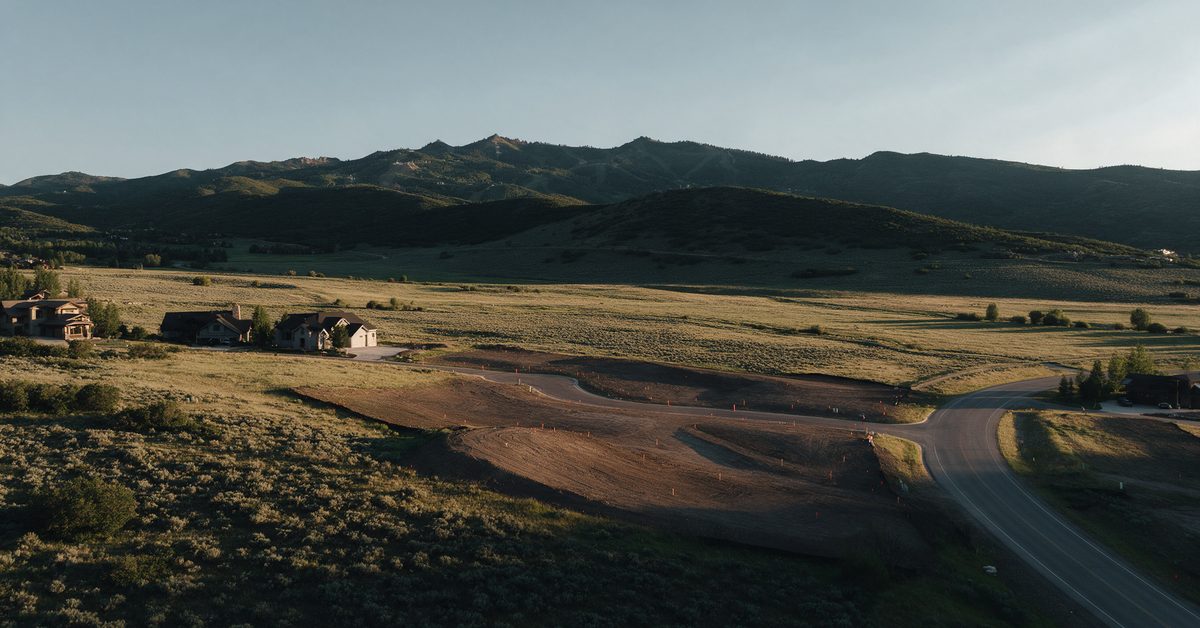
If you own land in Summit County, or you have a parcel under contract there, the rules for getting a project approved moved three times between early September and early October. None of the changes is dramatic on its own. Together they change the order things happen in, who decides, and what you may be asked to pay for before you get an answer.
Here is what changed, and the questions to ask about your own parcel.
What did the County Council approve on September 2?
On September 2 the Summit County Council approved Ordinance 1016 on a 3 to 2 vote. It creates a Concept Development Plan process for rezones in the Snyderville Basin. The Council can now approve a zoning change before the detailed, construction-level engineering is done. That engineering still has to happen, later in the review. TownLift summed up the idea in a headline over the summer: "A rezone first, details later?"
For an owner, the upside is real. You can learn whether a use and a density are possible before you pay for full engineering. The catch is that an approved concept is not an approved project. The conditions attached to the rezone, and the engineering review that follows, decide what you can actually build and what it will cost.
What does the new state law, SB 284, change?
Summit County also updated its Snyderville Basin and Eastern Summit County development codes to comply with Utah Senate Bill 284. As TownLift reported on September 20, two pieces matter most to applicants:
- If you want a business use that is not listed in the county code, you can ask the County Council for a code amendment directly, without going to the Planning Commission first.
- Appeals of administrative land-use decisions now go to an administrative law judge instead of the County Council.
The first can shorten the path for an unusual use, with less Planning Commission input along the way. The second changes where you go if a staff decision goes against you. An appeal to an administrative law judge turns on the code and on the record from the original decision, so what goes into that record the first time matters more than it used to.
What about traffic studies?
On October 2 the Park Record reported that the Eastern Summit County Planning Commission voted unanimously to recommend requiring a traffic impact study for any development expected to generate 25 or more vehicle trips during peak hours, 7 to 10 a.m. and 3 to 6 p.m. The developer would hire and pay a third-party engineering firm to prepare it. Only recurring operations count; one-time events would not trigger it. The Snyderville Basin Planning Commission endorsed the same amendment in September, and the County Council makes the final decision.
The Park Record quoted the commission's reasoning: "Without clear standards or a review process, traffic effects may be evaluated inconsistently."
Twenty-five peak-hour trips is not a large project. A modest subdivision or a small commercial building can reach it. If the Council adopts the amendment, a traffic study becomes a line in your budget and a step in your timeline before approval.
What should you check if you are buying or building in Summit County?
Three questions to answer before your due diligence deadline, while you still have leverage:
- Which approvals does this parcel need for what you plan to do, and which of them are discretionary (a board decides) and which are ministerial (staff checks the code)?
- Does the plan cross the 25-trip line, and if so, who pays for the traffic study and how much time does it add?
- If a staff decision goes against you, where does the appeal go now, and what needs to be in the record from the start?
Next door, Wasatch County adopted its first comprehensive General Plan update since 2001 in July. The plan does not rezone anything by itself, but the county has said its development regulations will be updated to follow it, so the same questions apply on the Heber side of the Wasatch Back.
How I can help
My Entitlement Risk Memo answers those questions for a parcel under contract: the required approvals, which are discretionary and which are ministerial, the political exposure, and a realistic timeline, written for a lender or an investment committee. The flat fee is $2,500.
If you hold land in more than one jurisdiction and want to hear about the next change before it passes, the Moratorium & Ordinance Change Watch is $1,000 per jurisdiction, ongoing.
Every land development fee is on the land development page.
Sources: TownLift, September 20, 2026 · TownLift, July 2026 · Park Record, October 2, 2026 · Wasatch County, July 17, 2026